 346 262 6075
 info@firedos.com


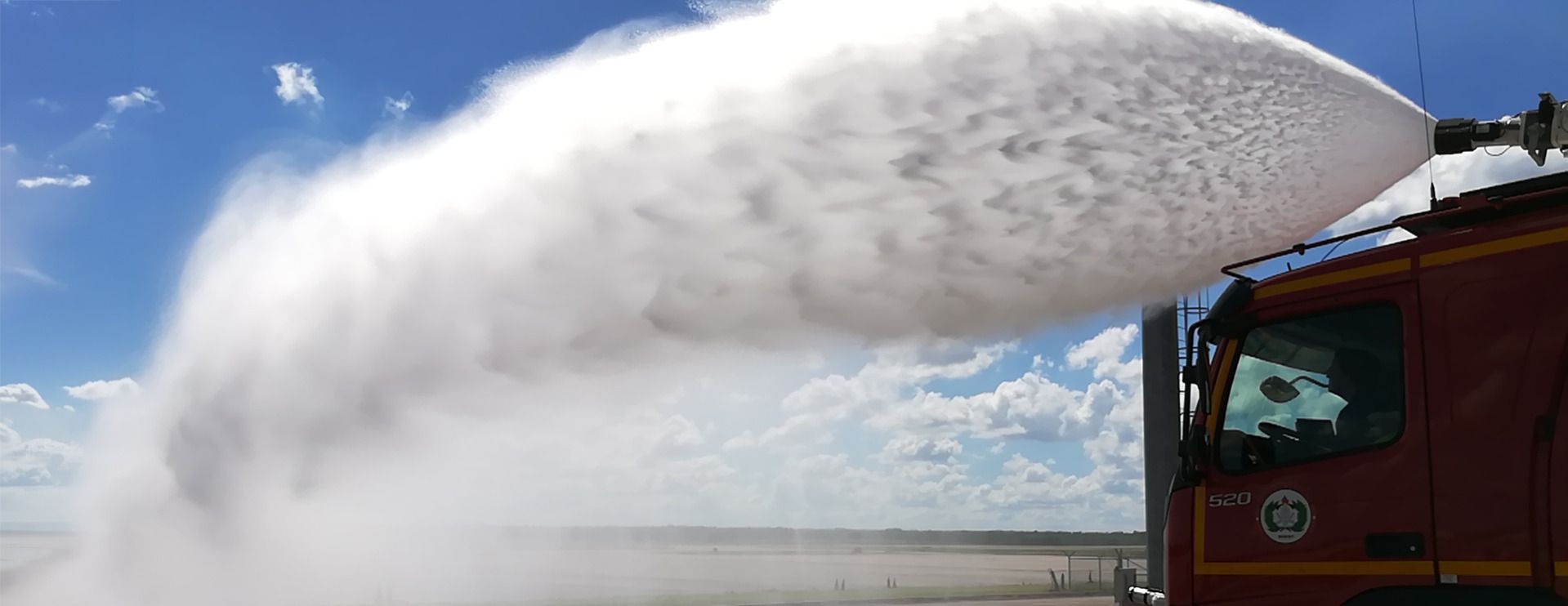
FireDos Monitors and CAN-Bus Control – One Complete Solution
Mobile Firefighting with FireDos Fire Monitors
For decades, FireDos has been synonymous with high-quality, precision foam proportioning systems — and increasingly with its own range of fire monitor systems.
The monitor product line was first introduced in 2010 at Interschutz in Hanover. The initial focus was on stationary firefighting applications, such as protecting tank farms, loading stations, waste incineration plants, recycling facilities, or hangars.
About the Author
Tristan Reitz
Dipl.-Ing. (FH), Market Manager Fire Service and Mobile Fire Protection at FireDos
Since 2000, he has been an active member of several volunteer fire departments and has extensive hands-on operational experience.
After graduating from the University of Applied Sciences in Giessen‑Friedberg, he spent ten years in sales at a renowned German fire apparatus manufacturer.
Since 2018, he has been responsible at FireDos for the Fire Service and Mobile Fire Protection segment.
His expertise is complemented by international experience from a stay in the USA, where he served as an observer with a fire department in Newark, Delaware.

Tristan Reitz
FireDos Fire Monitors: Optimal Flow Profile, Maximum Throw
The launch quickly drew interest from fire truck manufacturers and fire departments.
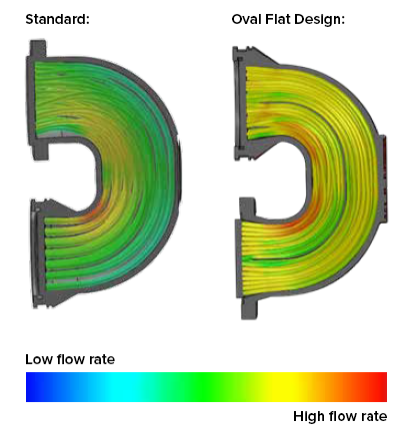
This was due in particular to the compact design and the specially developed Oval-Flat design with an internal baffle plate in the pipe bends.
This design optimizes flow velocity and minimizes pressure losses, resulting in a significantly longer throw while requiring lower inlet pressure at the monitor.
The first mobile-sector projects involved high-flow fire monitor trailers designed for tank fire fighting. Thanks to continuous development, FireDos monitors are now deployed in virtually all areas of firefighting.
Monitor Sizes and Extinguishing Flow Rates
FireDos fire monitors are divided into series M1 to M12, with M1 being the smallest and M12 the largest. The designation “M2” stands for Monitor Series 2.
Depending on the series, flow rates range from 150 l/min (M1) up to 60,000 l/min (M12).
The table below provides an overview of the different monitor series and their compatible nozzle combinations.
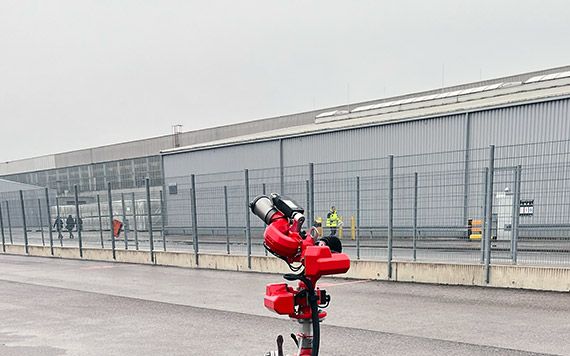
Fire monitor M1
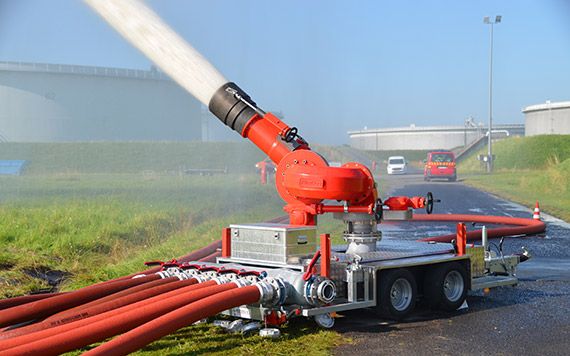
Fire monitor M9
While monitors sized M5 and larger—with water flow rates of 12,000 l/min or more—are primarily used for industrial firefighting on special-purpose vehicles, containers, and trailers, smaller models (M1 to M4) are used on airport rescue and firefighting (ARFF) vehicles and by municipal fire departments. Custom solutions for firefighting robots are also available and have been implemented on multiple occasions.
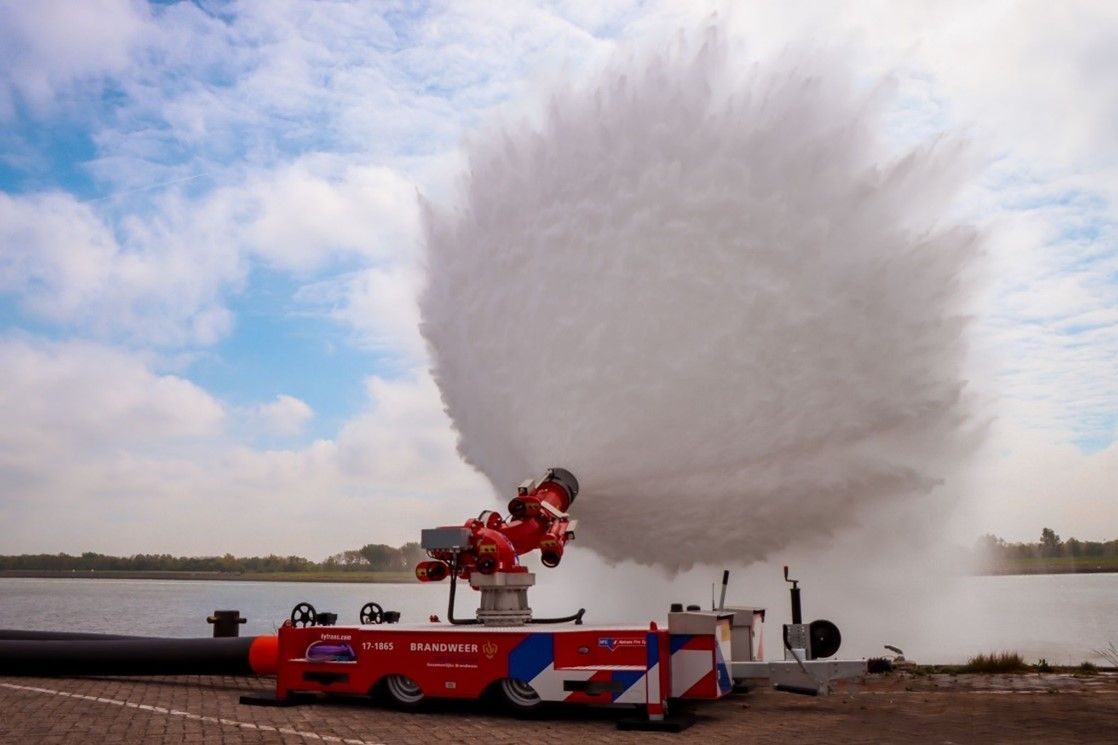
Fire monitor M9 on a fire trailer
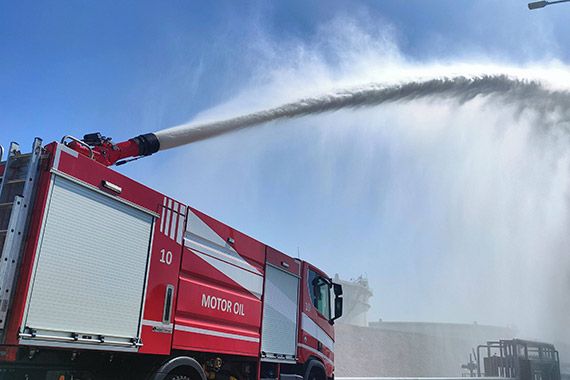
Fire monitor M5 on a tank fire truck
Overview of Fire Monitor Series, Extinguishing agent Flow Rates, Operation, and Nozzle Combinations
| Monitor series | Extinguishing agent flow rate [l/min] | Operation | Multi-purpose nozzle (MPN-nozzle) | Multi-purpose nozzle with adjustable extinguishing agent flow rate (AMPN-nozzle) | Multi-purpose nozzle with adjustable extinguishing agent flow rate & powder (AMPN-NDCx-nozzle) | Flat jet nozzle | Foam pipe with deflector (FPD) | Foam pipe with deflector and adjustalbe extinguishing agent flow rate (AFPD) |
| M1 |
150 - 1000 400 - 2000 |
DC | x | x | x | |||
| M2 | 300 - 2500 | MO / DC | x | x | x | x | x | |
| M3 | 500 -4500 | MO / DC | x | x | x (7 kg/s) * | x | x | x |
| M4 | 1000 - 8000 | MO / DC | x | x | x (15 kg/s) | x | x | |
| M5 | 2000 - 12000 | MO / DC | x | x | x | x | ||
| M7 |
2100 - 24000 3500 - 24000 |
MO / DC | x | x | x | x | ||
| M9 | 4500 - 40000 | MO / DC | x | |||||
| M12 | 10000 - 60000 | MO | x | |||||
|
Maximum operating pressure: 16 bar (PN16) Extinguishing agent flow rate depends on inlet pressure and nozzle type. Exact data can be found in the respective datasheet.
MO - manual operation * M3 with powder nozzle: maximum extinguishing agent flow rate limited to 4000 l/min |
||||||||
Operation of Fire Monitors
Fire monitors for fire departments are available in two operating modes:
- manual operation via handwheels
- electrically driven via 24 V DC
Manual Fire Monitor Operation (MO)
In manual operation, swiveling is performed using a handwheel for each axis (“Manually Operated” = MO). The horizontal axis allows infinite rotation (360°), while the vertical axis can move up to ±90°.
The worm gearboxes are self-locking, preventing unintended movement from recoil forces or external impacts.
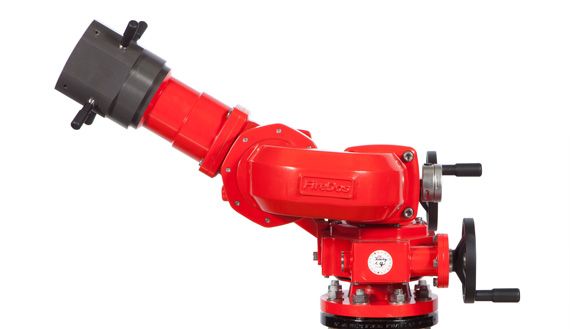
Fire monitor M2 with handwheels for manual operation
Electrically Driven Fire Monitors (DC)
Electrically driven monitors use 24-V DC motors. The worm gear drives are equipped with actuators and 4–20 mA position sensors, enabling precise remote control of the swivel movement.
Manual emergency operation via handwheels is available at any time.
Nozzle adjustment for full jet and spray patterns is also electrically driven.
Selecting a Fire Monitor by Drive Type
Not all series are available in all drive options.
M1 to M9 monitors can be fitted with 24 V DC drives. In addition to adjusting horizontal and vertical axes, spray pattern and agent flow can also be controlled electrically.
In case of power failure, emergency operation is possible via spring-loaded handwheels or a socket wrench.
M2 to M12 monitors are available in manual handwheel operation.
Fire monitor nozzles for all fire scenarios
FireDos fire monitors are available with a range of nozzles tailored to different application scenarios.
Multi-Purpose Nozzle – The All-Rounder
The basic principle of fire monitor nozzles is the multi-purpose nozzle (MPN or AMPN).
The MPN (Multi-Purpose Nozzle) is configured to a customer-defined flow rate and operating pressure. These parameters are verified on FireDos’ in-house test bench and adjusted if necessary.
The AMPN (Adjustable Multi-Purpose Nozzle) allows continuous adjustment of the flow rate during operation. Adjustment is made via the baffle plate at the nozzle outlet, enabling precise regulation of the flow.
On manual monitors, adjustment is carried out by hand, while electric versions use a 24 V drive. The flow rate can be adjusted continuously or in defined steps, ensuring efficient and targeted use of the extinguishing agent.
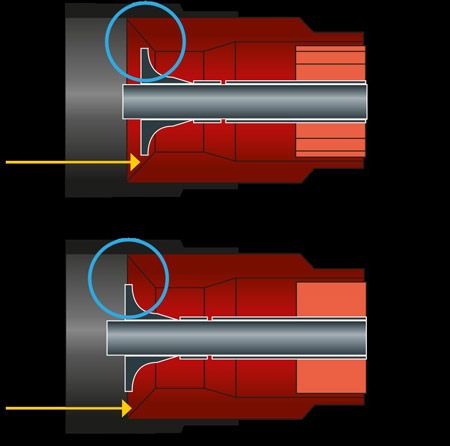
Cross-section of the AMPN fire nozzle allowing continuous adjustment of the flow rate
Top: small gap, resulting in low water flow
Bottom: large gap, resulting in high water flow
Powder Nozzle (AMPN-NDC7 / AMPN-NDC15) – One Nozzle, Three Agents
Certain fire scenarios require the use of dry chemical powder.
For this purpose, the M3 and M4 monitor series have been developed with an integrated powder tube in the nozzle. This allows water, foam, and powder to be discharged through the same monitor—either individually or in combination.
The combination of water and powder enables a longer throw distance and is particularly suitable for fires in pressurized lines or pipelines. The fire monitor is first aimed at the fire source using water to cool the area. Once sufficient cooling has been achieved, the
powder discharge can be activated to extinguish the fire.
Powder application rates are up to 7 kg/s for the M3 and 15 kg/s for the M4.
FLAT JET NOZZLE — GREATER THROW DISTANCE WITH A WIDE SPRAY PATTERN
The standard MPN and AMPN nozzles have been continuously further developed in recent years, with a focus on different spray patterns. This also led to the development of a flat jet nozzle (fan jet nozzle).
With a conventional hollow jet nozzle, the spray pattern can be adjusted from a full jet to a cone-shaped spray jet. The cone shape has the advantage of distributing the extinguishing water over a larger area. However, this comes at the expense of throw distance, which is reduced accordingly.
An alternative is the newly developed flat jet nozzle. Instead of a conventional cone-shaped spray pattern, it produces a flat, fan-shaped jet. This has the advantage of significantly increasing throw distance again, allowing firefighting to be carried out from a greater safety distance.
Another benefit is the wider spray coverage. Instead of point-attack firefighting with a full jet, the flat jet can cover a width of at least 4 m. This is particularly advantageous for vegetation and forest fire fighting, as larger areas can be extinguished more efficiently.
Another application is the application of a wide foam blanket, such as required in aircraft fire fighting. This effect has traditionally often been achieved using a deflector plate, which spreads the solid stream into a wider spray pattern.
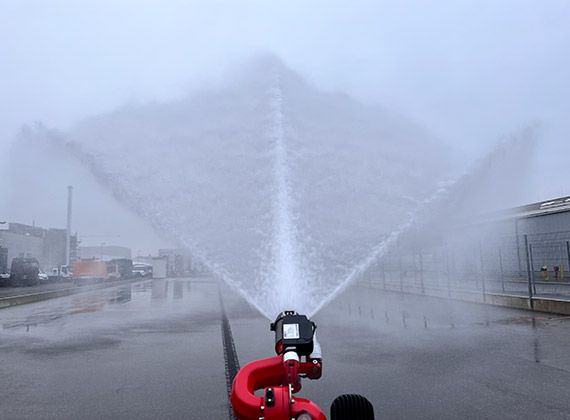
Flat jet nozzle - greater throw distance with a wide spray pattern
Foam pipe with Deflector – Optimized Foam Formation
With the transition to environmentally friendly, fluorine-free foam concentrates, the discharge devices—particularly the nozzles—also had to be adapted. They play a key role in the aeration of the water-foam concentrate mixture (premix) to generate high-quality foam.
Depending on the foam concentrate used, the low expansion ratio achievable with standard fire monitor nozzles such as MPN and AMPN is not sufficient to produce effective firefighting foam. By using a foam pipe attachment, the air content can be increased and the expansion ratio raised from approximately 6–8 to around 12–14.
An alternative is the AFPD nozzle (Adjustable Foam Pipe with Deflector). With this nozzle, the flow rate can be adjusted during operation—similar to the AMPN described above.
The integrated foam pipe with deflector additionally enriches the water-foam concentrate mixture with air, thereby further improving foam formation in a targeted way.
With the help of the deflector, a foam blanket up to 14 m wide can be produced at 6 bar.
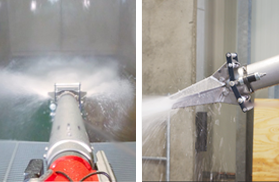
Foam pipe with deflector for large-surface foam application
left: deflector open
right: deflector closed
INSTALLATION OF FIRE MONITORS ON EMERGENCY VEHICLES
In addition to fire monitors, FireDos also offers mounting solutions for vehicles and roll-off containers.
Folding Bracket
A folding bracket allows space-saving roof mounting of the manually operated M2 monitor. When unfolded, the hinge reaches a height of 500 mm. An eyelet allows firefighters to secure themselves against falls.
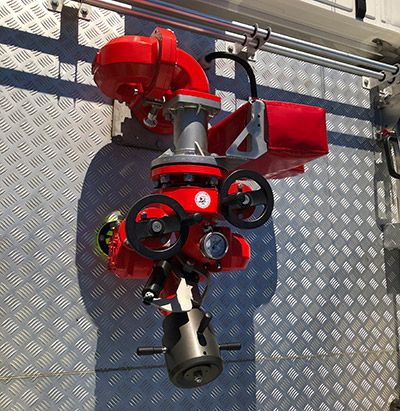
Folding bracket for M2 fire monitor – folded position
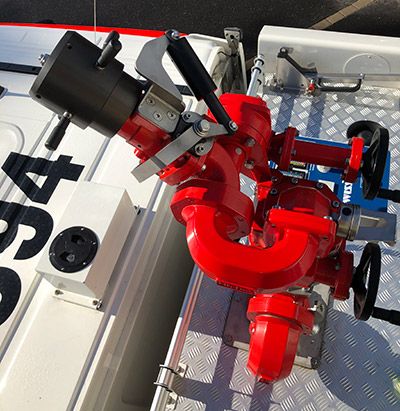
Folding bracket for M2 fire monitor – extended position
24 V swivel unit
A 24 V swivel unit is available for electrically operated monitors in sizes M2 and M3. This unit can be installed together with the monitor in a roof cut-out or roof housing. When activated, the swivel unit extends, and the fire monitor automatically moves from its stowed position into a predefined attack position (operating position).
Advantage of this solution: the monitor can also be mounted directly above the water tank on the vehicle roof. The connection to the fire pump water supply can then be designed with a flexible layout.
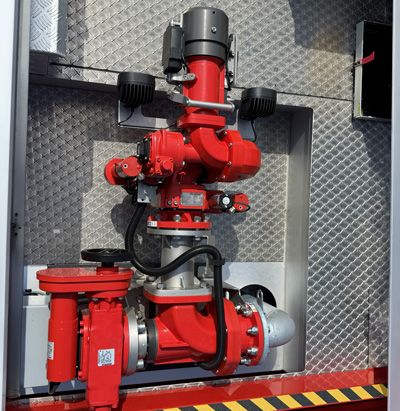
24 V swivel unit with fire monitor in parking position
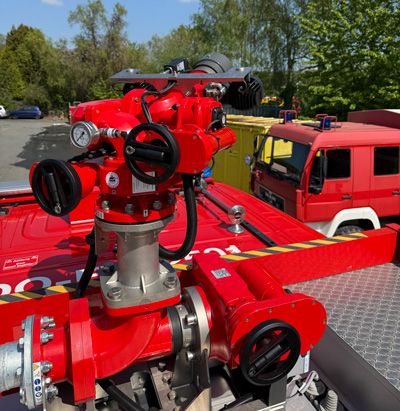
24 V swivel unit with fire monitor in operating position
Monitor lift
To complete its portfolio, FireDos has also offered a pneumatic lifting device since 2026. Fire monitors in sizes M2 to M5 can be mounted on this system. The lifting height is approximately 500 mm. Integration of an additional telescopic powder line is optionally available. This also allows monitor series equipped with a powder nozzle to be used with the lifting device.
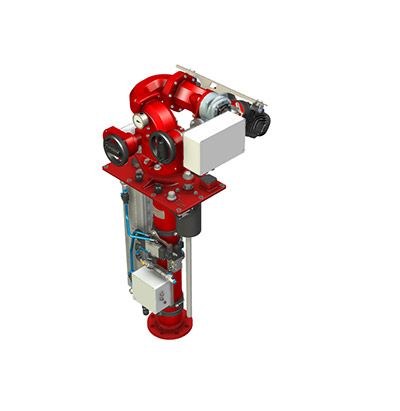
FireDos monitor lift in parking position
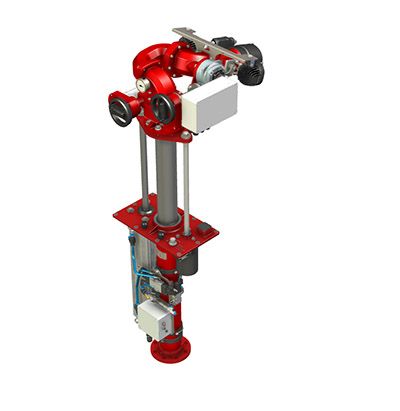
FireDos monitor lift in operating position
ELECTRONIC (REMOTE) CONTROL OF FIRE MONITORS
All FireDos monitors can be integrated into the vehicle manufacturer’s 24 V body control system.
FireDos FCON 24 V CAN-Bus control system
In addition, FireDos offers its own CAN-bus control system, specifically optimised for FireDos monitors. The system is preconfigured at the factory according to the customer’s required parameters. Obstacle profiles such as warning lights, antennas, roof compartments, or radiator grilles can be programmed and adjusted directly on the vehicle at any time, without the need for additional accessories.
For commissioning, the components simply need to be connected via a CAN-bus cable. With a 24 V DC connection at the monitor terminal box, the system is immediately ready for operation.
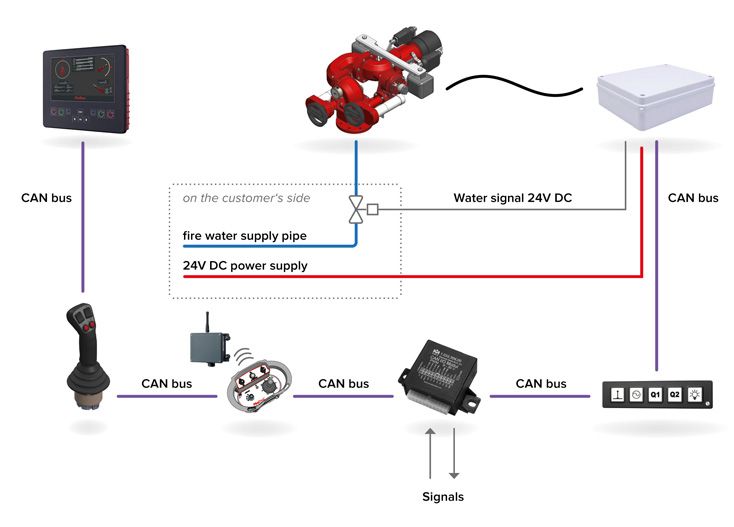
Overview of the FCON 24 V CAN-bus control system for FireDos fire monitors
The core of the control system is a robust 4.3-inch colour display, suitable for both exterior and cab installation. Thanks to its very bright screen, it remains easily readable even in direct sunlight and at unfavourable viewing angles. Operation is carried out via four colour-backlit function keys and four navigation keys. Installation is performed using the included RAM mount or, alternatively, as a flush-mounted solution in the dashboard or pump control panel.
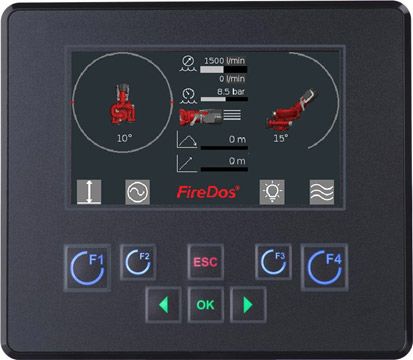
4.3-inch colour display of the FCON control system
Through this display with HMI functionality, and in combination with a pressure sensor on the FireDos monitor, the actual throw distance can be calculated and displayed. The FireDos CAN-bus control system also allows additional functions to be integrated as an option.
An IO box enables the processing of signals from the chassis or superstructure, such as water valves, foam valves, water and foam tank levels, or pump pressure. All functions can be operated and displayed via the HMI or the remote radio control.
Two operating options are available:
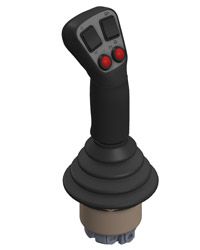
- Cab control: An ergonomic joystick can be flexibly mounted and is suitable for both left- and right-handed operation. It allows direct control of all main functions, such as water on/off, spray/full jet, extinguishing agent adjustment, lighting, or oscillation.
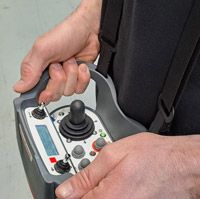
- Remote control system: The high-quality remote radio control offers a theoretical range of 200 m. In case of connection issues, it can be connected directly to the receiver via a 10 m emergency control cable. All functions of the fixed display are also available via the remote control. If two electrically operated monitors are installed, both can be controlled using a single remote control
The New compact M1 Fire Monitor
With our M1 fire monitor, we are setting new standards: it is one of the world’s smallest fire monitors with 24 V electric drives.
The designation M1-DC / AMPN1-DC refers to monitor series 1 in a 24 V DC version, equipped with a multi-purpose nozzle featuring electrically stepless adjustment of the extinguishing agent flow rate.
The monitor body is designed to allow selection between two different extinguishing agent flow ranges:
- AMPN nozzle: Extinguishing agent flow rate 150–1,000 l/min. Designed for water-efficient operation with maximum throw distance and an optimal spray pattern, ideal for vegetation and forest fires.
- Multi-purpose nozzle with higher extinguishing agent flow rate: Infinitely adjustable from 400–2,000 l/min. This version typically covers front and roof monitors on tank fire trucks in most applications.
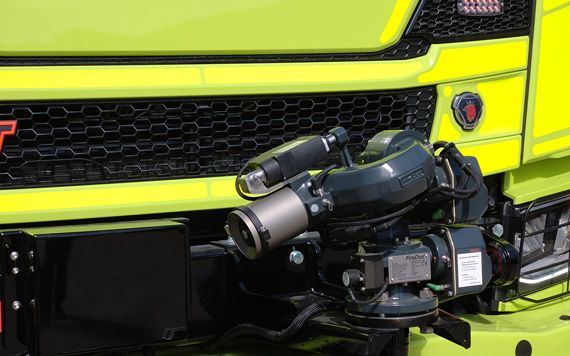
M1 as a front monitor on a tank fire truck
Ready for the Future
Since 2010, the FireDos line of fire monitors has undergone continuous development. High quality standards, robust construction, ongoing testing, constant optimization, and the incorporation of customer feedback ensure that our monitors and control systems are continually improved.
At FireDos, we will continue to develop and manufacture products by firefighters, for firefighters.
This might also be of interest for you:
Portable proportioners for fire brigades
Maximum flexibility in mobile use
View more
What is wetting agent?
Wetting agent penetrates deeper into the fuel. Read about what to consider.
View more
Our solutions for fire brigades
Reliable and versatile firefighting technology, when every second matters.
View more